MDMA and Couples Therapy: What a Six-Couple Pilot Can Tell Us
MDMA-assisted therapy remains a subject of clinical investigation, and credible reporting needs clear boundaries around what is known. This guide examines MDMA couples therapy pilot without turning preliminary evidence into a treatment promise.
A PTSD-specific relationship question
A 2020 uncontrolled pilot involved six couples, each with one partner having PTSD. It combined condensed cognitive-behavioural conjoint therapy with two MDMA sessions involving both partners. All completed the protocol, with no serious adverse events reported. Researchers described symptom and relationship-measure improvements, not treatment of ordinary relationship dissatisfaction.
Two papers do not mean replication
A 2021 paper examined additional intimacy, support and post-traumatic-growth outcomes in the same six couples. Several improvements remained at follow-up, including three- and six-month assessments. Additional publications illuminate a dataset but do not increase the number studied or demonstrate independent confirmation.
Added drug value remains uncertain
No randomized CBCT-without-MDMA group existed. Improvements cannot be confidently separated into drug, psychotherapy, expectation or intensive attention contributions. Volunteers may differ from routine care seekers. Feeling closer on questionnaires does not establish relationship safety or suitability where coercion exists. Each partner independent consent and welfare require safeguards.
A research hypothesis, not a relationship prescription
Six couples tell little about uncommon harm or variation across relationship types. Many outcomes in a tiny sample need independent confirmation. The study supports investigating relational function alongside PTSD, not an approved or proven general couples treatment. It should not promote unsupervised use between partners. Ask what evidence actually applies to the relationship and diagnosis rather than assuming a reported intimacy change resolves safety, conflict or lasting-function questions.
This article is informational, not an individualized treatment recommendation. A qualified clinician can interpret the evidence alongside your diagnosis, history and existing care. Do not alter prescribed treatment based on a study summary.
Sources
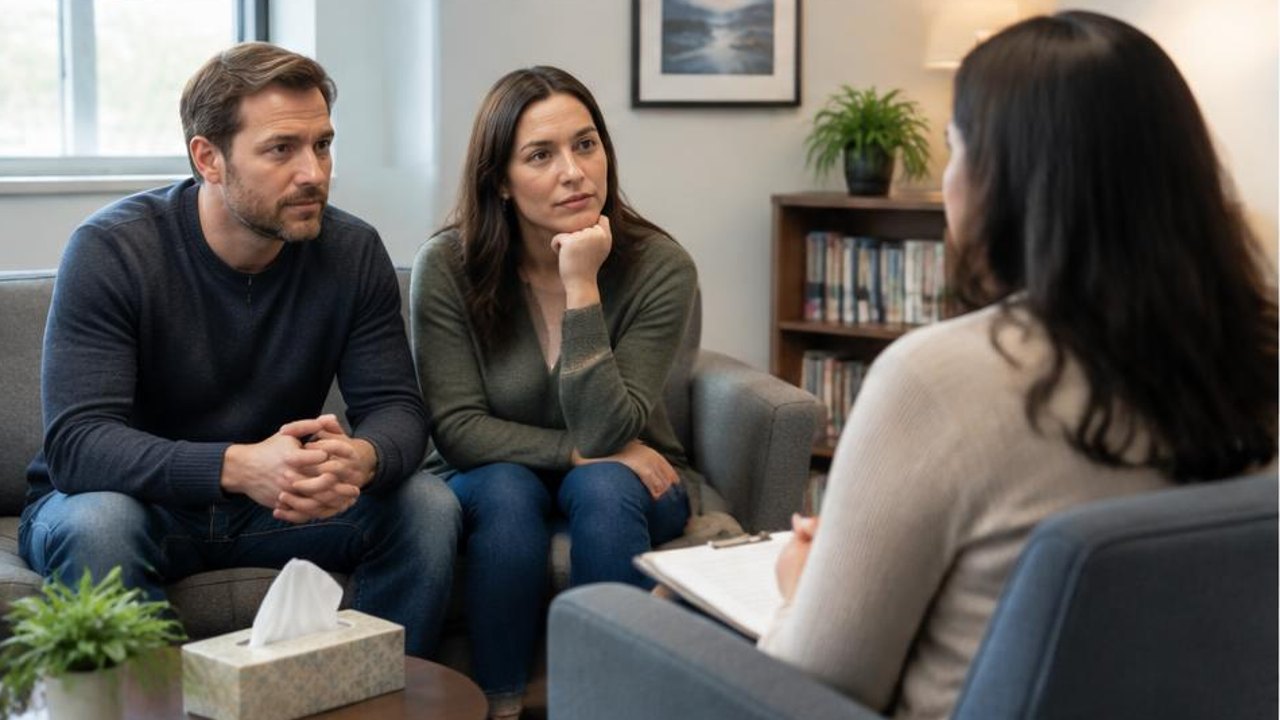
This article is for general information, not individual medical advice. Illustration is AI-generated and does not depict actual study participants.
Frequently Asked Questions
- A PTSD-specific relationship question?
- A 2020 uncontrolled pilot involved six couples, each with one partner having PTSD. It combined condensed cognitive-behavioural conjoint therapy with two MDMA sessions involving both partners. All completed the protocol, with no serious adverse events reported. Researchers described symptom and relationship-measure improvements, not treatment of ordinary relationship dissatisfaction.
- What is the main evidence limitation?
- No randomized CBCT-without-MDMA group existed. Improvements cannot be confidently separated into drug, psychotherapy, expectation or intensive attention contributions. Volunteers may differ from routine care seekers. Feeling closer on questionnaires does not establish relationship safety or suitability where coercion exists. Each partner independent consent and welfare require safeguards.
- What should readers take away?
- Six couples tell little about uncommon harm or variation across relationship types. Many outcomes in a tiny sample need independent confirmation. The study supports investigating relational function alongside PTSD, not an approved or proven general couples treatment. It should not promote unsupervised use between partners. Ask what evidence actually applies to the relationship and diagnosis rather than assuming a reported intimacy change resolves safety, conflict or lasting-function questions.
Written by
MDMA Therapy News Editorial Team
The MDMA Therapy News editorial team researches peer-reviewed literature, clinical trial registries and regulator announcements, then writes plain-language guides for patients, families and clinicians. We do not provide medical advice or promote unlicensed medicines.
 PreviousReaching PTSD Care: What Telehealth Trials Can—and Cannot—Teach MDMA Research
 NextKeeping PTSD Care Moving While MDMA Remains Investigational